Text
Actions
Vision-Language Model
Expert
States
Instructions
Dynin-Robotics is an omnimodal vision-language-action model built on the masked-diffusion model (MDM) backbone of Dynin-Omni. It extends a shared discrete token space to language, visual observations and future states, robot actions, and optional sensor or metadata context, representing them as variables of one partially observed trajectory. Through unified objective training, a single model learns policy generation, action-conditioned world modeling, instruction understanding, and goal-state prediction by changing only which spans are visible and which are denoised. At inference time, this shared interface supports six operating modes that combine block-wise action generation with optional goal prediction, joint world-action denoising, or world-model-based candidate reranking. Across LIBERO, LIBERO-Plus, VLABench, and real-world FR3 manipulation, Dynin-Robotics achieves strong performance and robustness, while an accelerated dInfer path delivers up to 29.15× higher effective action-token throughput with minimal prediction quality degradation.
Language-oriented policies understand instructions, while video and world models predict how scenes change. Dynin-Robotics brings both abilities—and action generation—into one shared model.
Dynin-Robotics unifies policy generation, world modeling, task understanding, and goal-state prediction in a single masked-diffusion backbone. Each capability is realized as a different conditional denoising query over the same multimodal robot trajectory.
Generate robot action sequences from the current visual state and task instruction.
Predict future visual states from observed frames and robot actions.
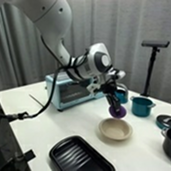
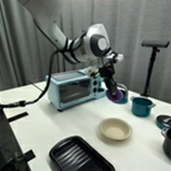
Generate a goal state from an initial observation and language instruction.
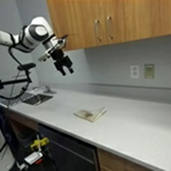
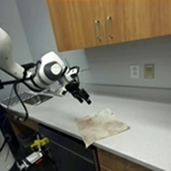
Decode an observed task trajectory into a natural-language task description.
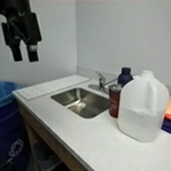
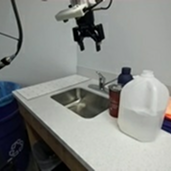
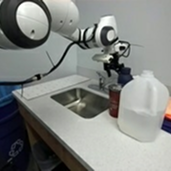
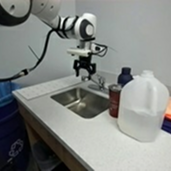
A shared bidirectional Transformer reconstructs masked text, image/video, and action tokens through three parallel modality pathways.
A single Dynin-Robotics backbone learns policy, world modeling, goal-state prediction, and instruction understanding by changing which trajectory tokens are visible, optional, or masked for prediction.
Generate robot actions from the observed state and instruction, with optional goal-state context and sensor input.
Predict the next visual state from the current state, with language and action provided when available.
Generate a visual goal state from the initial observation and task instruction.
Recover the task instruction from an observed sequence of robot states.
One post-trained model composes policy, goal-state, and world-model predictions into six inference strategies, ranging from direct action decoding to goal-guided joint denoising and dynamics-aware candidate reranking.
Directly denoise an action chunk from the current state and instruction.
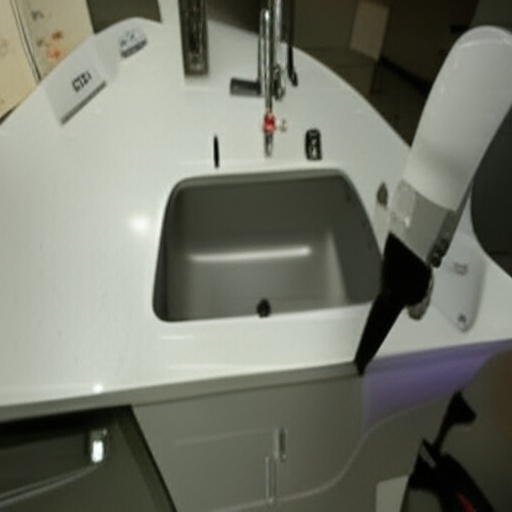
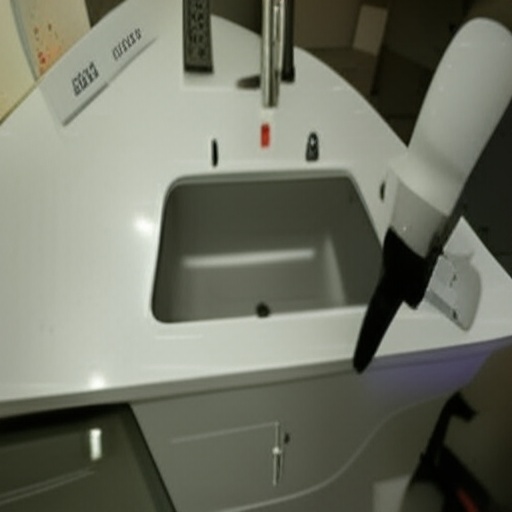
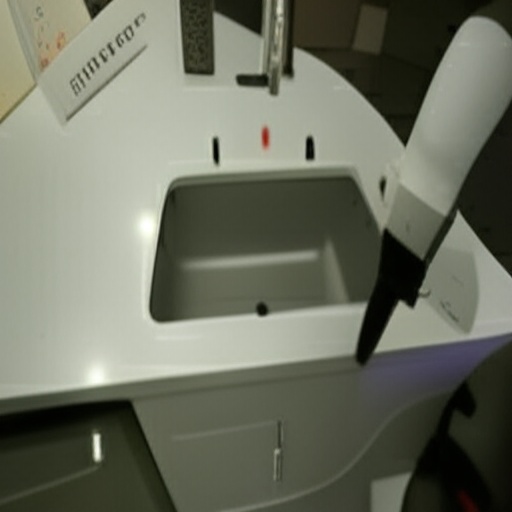
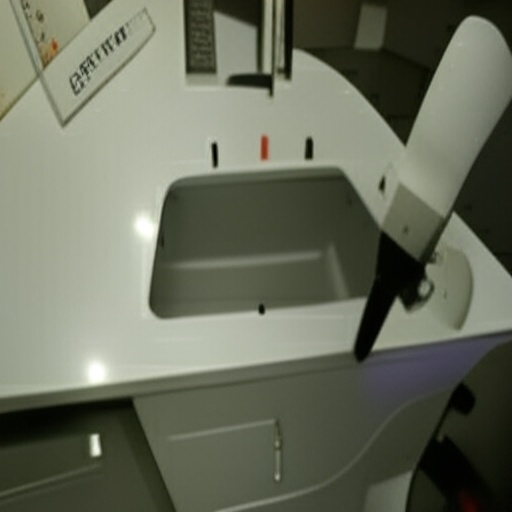
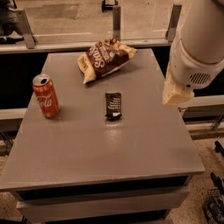
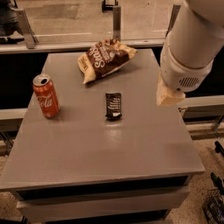
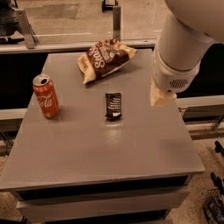
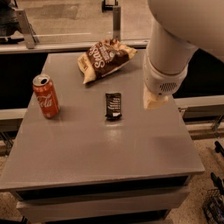
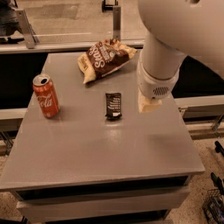
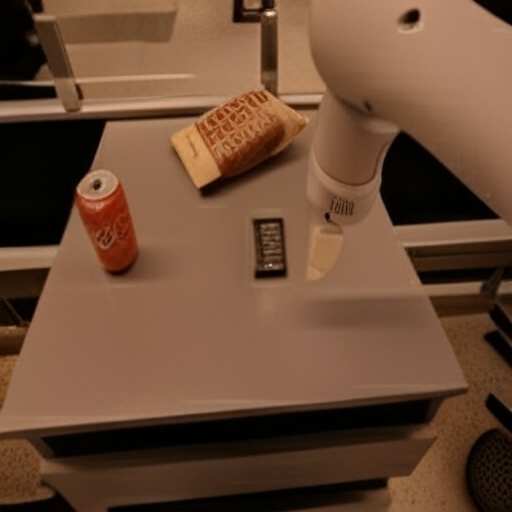
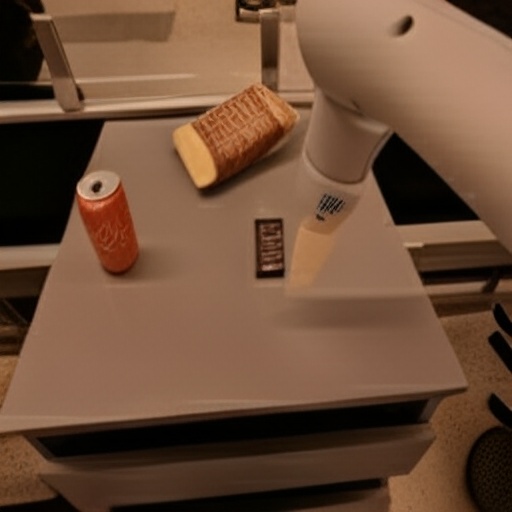
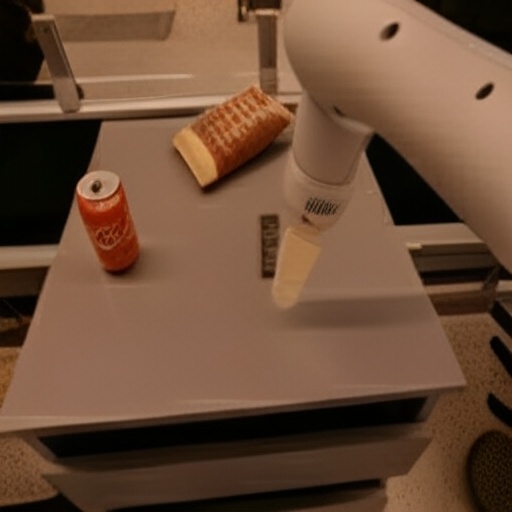
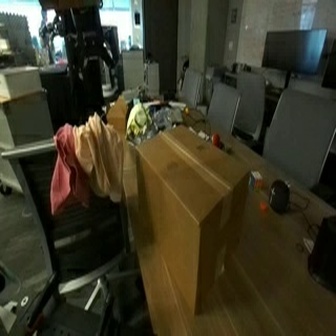
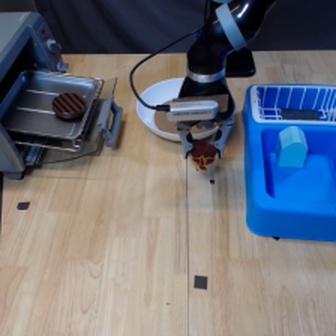
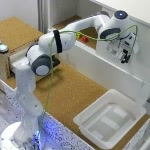
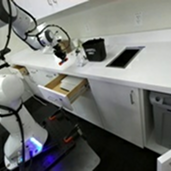
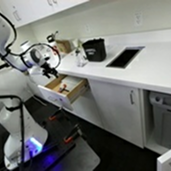
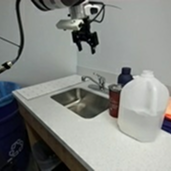
Demonstration rollouts across LIBERO, LIBERO+, and real-world manipulation tasks on the Franka Research 3 platform.
2× · autonomous
Qualitative results show how Dynin-Robotics predicts visual futures, imagines instruction-conditioned goal states, and reconstructs task language from frame sequences.
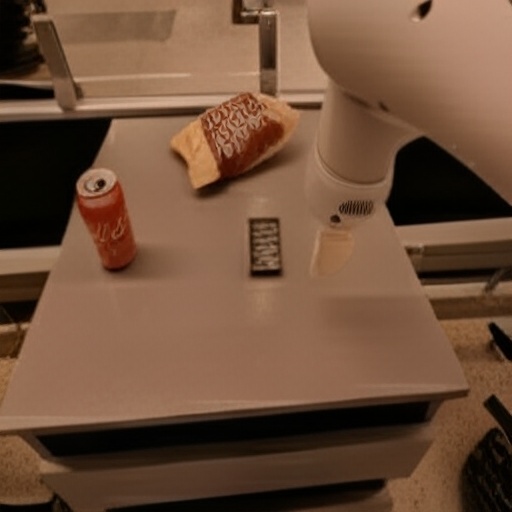
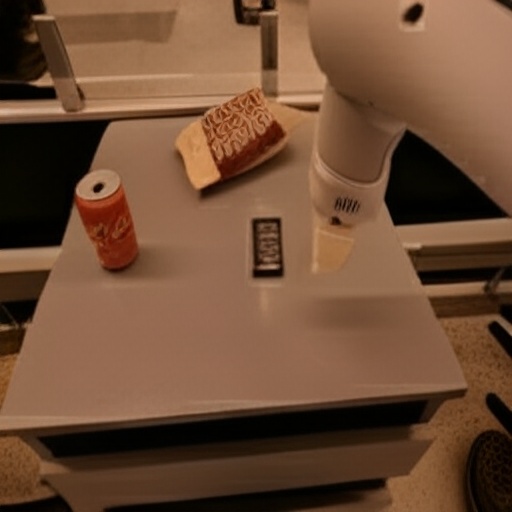
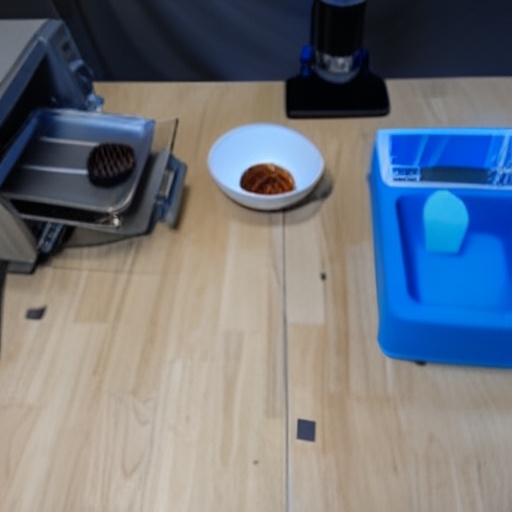
Predict future visual states from five observed frames and a six-dimensional robot action.
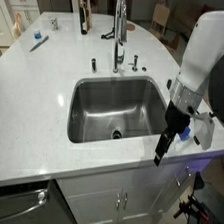
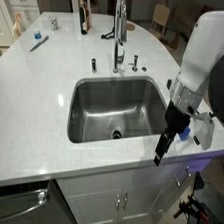
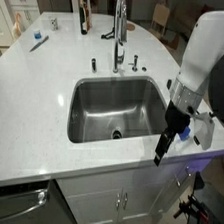
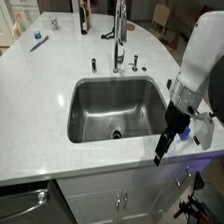
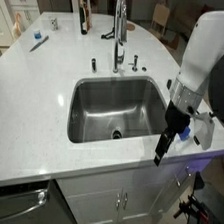
An initial state and a language instruction condition the generated goal state.
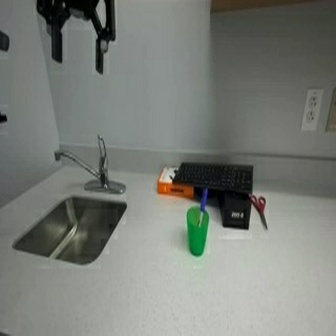
Take the pen out of the cup and place it on the counter
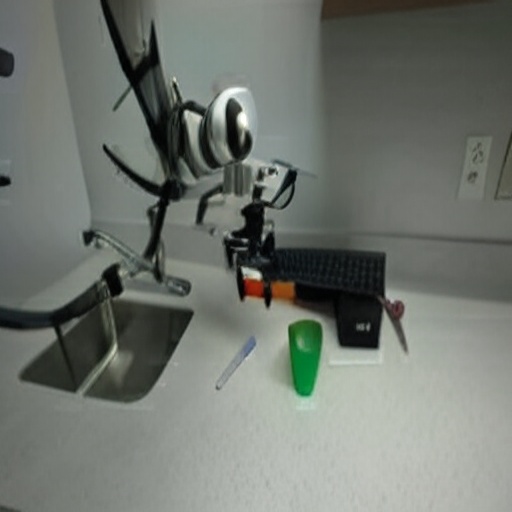
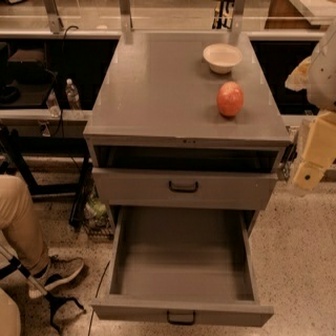
place apple into middle drawer
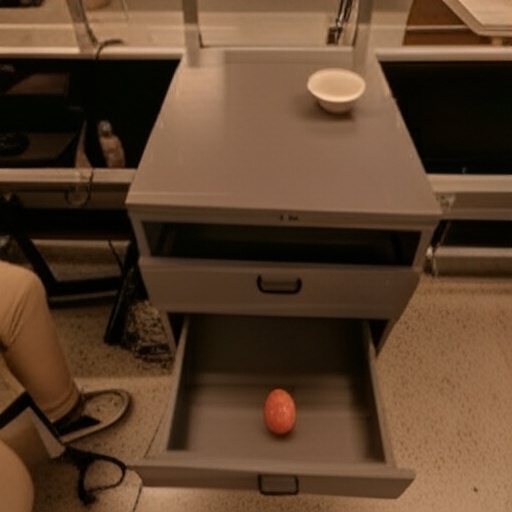
An ordered frame sequence plays as a short clip and is decoded into a task instruction.
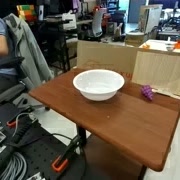
Put the purple object in the bowl
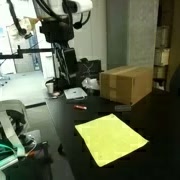
Fold the cloth on the table
The selected comparison rows below retain the paper’s model-family grouping. LIBERO is close to saturation, while LIBERO-Plus more clearly exposes robustness to camera, embodiment, language, lighting, background, noise, and layout shifts. The throughput results also summarize action-decoding gains from the modified dInfer framework.
Success rate (%)
| Model | Spatial | Object | Goal | Long | AVG↑ |
|---|---|---|---|---|---|
| Vision-Language Model | |||||
| π0.5 | 98.8 | 98.2 | 98.0 | 92.4 | 96.9 |
| ABot-M0 | 98.8 | 99.8 | 99.0 | 96.6 | 98.6 |
| Video Generation Model | |||||
| Cosmos Policy | 98.1 | 100.0 | 98.2 | 97.6 | 98.5 |
| LingBot-VA | 98.5 | 99.6 | 97.2 | 98.5 | 98.5 |
| Unified Model | |||||
| MMaDA-VLA | 98.8 | 99.8 | 98.0 | 95.2 | 98.0 |
| Dynin-Robotics | 98.9 | 99.8 | 97.8 | 95.8 | 98.1 |
Success rate (%)
| Model | Camera | Robot | Language | Light | Background | Noise | Layout | AVG↑ |
|---|---|---|---|---|---|---|---|---|
| Vision-Language Model | ||||||||
| OpenVLA-OFT | 56.4 | 31.9 | 79.5 | 88.7 | 93.3 | 75.8 | 74.2 | 69.6 |
| π0 | 13.8 | 6.0 | 58.8 | 85.0 | 81.4 | 79.0 | 68.9 | 53.6 |
| π0-FAST | 65.1 | 21.6 | 61.0 | 73.2 | 73.2 | 74.4 | 68.8 | 61.6 |
| RIPT-VLA | 55.2 | 31.2 | 77.6 | 88.4 | 91.6 | 73.5 | 74.2 | 68.4 |
| ABot-M0 | 60.4 | 67.9 | 86.4 | 96.2 | 91.6 | 86.4 | 82.6 | 80.5 |
| Unified Model | ||||||||
| UniVLA | 1.8 | 46.2 | 69.6 | 69.0 | 81.0 | 21.2 | 31.9 | 42.9 |
| Dynin-Robotics | 59.8 | 48.2 | 85.0 | 83.5 | 84.6 | 78.2 | 71.8 | 73.0 |
We ablate both unified post-training objectives and inference strategies on VLABench to examine how complementary supervision and inference-time composition affect robustness to out-of-distribution instructions. ID and OOD results are shown together with the reported OOD gap and effective throughput.
| Training variant | ID | OOD | Gap ↓ |
|---|---|---|---|
| Policy only | 47.15 | 33.88 | 13.27 |
| + World Modeling | 46.01 | 39.54 | 6.47 |
| + Task Understanding | 49.38 | 45.29 | 4.09 |
| + Goal-State Prediction | 49.61 | 47.28 | 2.33 |
| Inference variant | ID | OOD | Gap ↓ | Throughput ↑ |
|---|---|---|---|---|
| (a) Default Policy | 45.8 | 41.4 | 4.4 | 9.238 |
| (b) Action/World Model Joint Denoise | 46.4 | 40.5 | 5.9 | 8.805 |
| (c) Goal-State Guided Policy | 45.6 | 38.2 | 7.1 | 9.208 |
| (d) Action Candidate Reranking | 46.3 | 42.0 | 4.3 | 4.904 |
| (e) Goal-State Guided + Action/World Model Joint Denoise | 49.6 | 47.2 | 2.4 | 8.709 |
| (f) Goal-State Guided + Action Candidate Reranking | 48.9 | 47.7 | 1.4 | 4.828 |
Random-instruction diagnostics reveal complementary language and visual-dynamics priors.
Under random instructions, π0.5 loses 0.16 success on InsertFlower and 0.30 on SelectFruit, showing clear language sensitivity. Mimic-Video changes by +0.10 and +0.02, respectively, indicating stronger reliance on visual and task-level action priors.
stronger semantic sensitivity
stronger task-level visual prior
This diagnostic explains complementary priors; it is not a standalone ranking of overall policy quality.
§ Project lead
¶ Core contributors
† Supervision and Corresponding author